

Coastal Texas HVAC FAQs: What Coastal Bend Homeowners Should Know
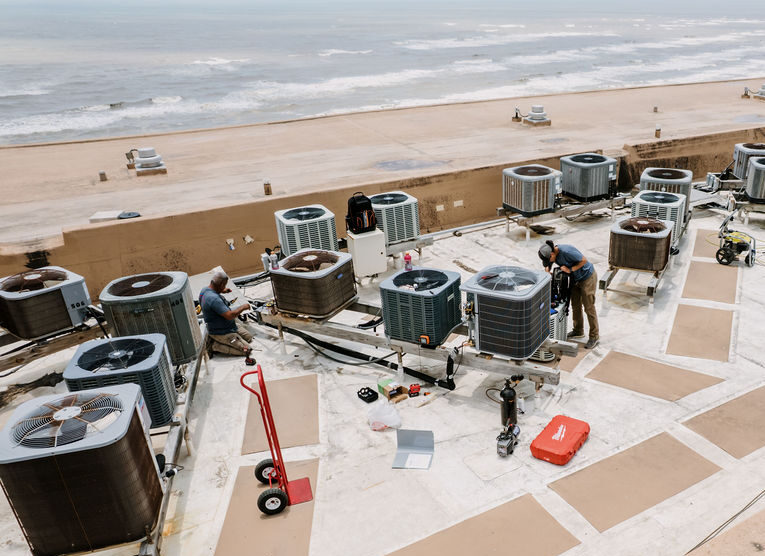
Living along the Texas coast has plenty of advantages—but your air conditioning system faces conditions that HVAC equipment farther inland simply doesn’t experience.
Homeowners in Port Aransas, Rockport, Aransas Pass, North Padre Island, Corpus Christi, and surrounding Coastal Bend communities regularly deal with high humidity, salt-filled coastal air, extreme summer temperatures, and long cooling seasons.
At Highland AC – Coastal Bend, we get a lot of questions about how these conditions affect HVAC systems. Here are answers to some of the most common questions coastal homeowners have about their air conditioning.
TL;DR: Is HVAC Different Near the Texas Coast?
Yes. Coastal HVAC systems generally have to deal with:
- High humidity for much of the year
- Salt-air corrosion
- Long cooling cycles and heavy summer workloads
- Outdoor equipment exposed to harsh coastal conditions
- Vacation and second homes sitting unattended
- Greater importance of proper humidity control and maintenance
That doesn’t mean your HVAC system should constantly have problems. It means equipment selection, installation, maintenance, and early detection of issues become especially important near the coast.
1. Does Salt Air Really Damage an Outdoor AC Unit?
Yes. Salt air can accelerate corrosion of HVAC components, particularly outdoor condenser coils, cabinets, fasteners, electrical connections, and other exposed metal parts.
You don’t necessarily need to live directly on the beach to experience coastal corrosion. Salt and moisture can travel inland, and equipment that remains outdoors year after year is continuously exposed.
A little surface rust doesn’t automatically mean your system needs replacement. However, significant corrosion can eventually affect coil integrity, electrical components, refrigerant containment, and the overall life of the equipment.
That’s one reason regular HVAC inspections are particularly valuable in Port Aransas, North Padre Island, Rockport, and other communities near the water.
2. Why Does My Coastal Home Feel Humid Even When the AC Is Running?
This is one of the most important HVAC questions for Coastal Bend homeowners.
Your air conditioner isn’t only supposed to lower the temperature. It also removes moisture from indoor air.
A house can reach 74°F and still feel uncomfortable if indoor humidity remains high.
Possible causes include:
- An oversized HVAC system that cools the home too quickly
- Short cycling
- Air leaks allowing humid outdoor air inside
- Duct leakage
- Dirty coils or airflow problems
- Improper equipment operation
- High indoor moisture loads
- A system that isn’t providing enough dehumidification
If your home regularly feels sticky, clammy, or unusually humid, don’t assume that’s simply part of living near the coast. It may be worth having the HVAC system evaluated.
3. What Indoor Humidity Should I Aim For?
For most homes, maintaining indoor relative humidity below about 60% is important, with many people finding somewhere around 40%–55% comfortable.
Coastal conditions can make this challenging.
If indoor humidity consistently remains above 60%, you may notice musty odors, condensation, discomfort, or conditions that are more favorable for microbial growth.
The solution isn’t always a standalone dehumidifier. The first step is figuring out why the HVAC system and home aren’t controlling moisture effectively.
4. Should I Rinse Salt Off My Outdoor AC Unit?
Keeping excessive salt, sand, grass, and debris from accumulating around an outdoor condenser can be helpful, but cleaning should be done correctly.
Avoid blasting condenser coils with a high-pressure washer. The thin coil fins can be damaged or bent.
Coastal homeowners should also be cautious about assuming that simply spraying the unit occasionally replaces professional maintenance. A technician can inspect areas you may not see, including electrical connections, coil condition, refrigerant performance, drainage, and signs of developing corrosion.
5. Why Does My AC Struggle More in the Afternoon?
This is extremely common during a South Texas summer.
Between mid-afternoon and early evening, your home may be dealing with its highest heat load of the day.
Heat can be entering through:
- The roof and attic
- West-facing windows
- Exterior walls
- Doors and air leaks
- Poorly insulated areas
At the same time, your outdoor condenser is trying to reject heat while operating in very hot outdoor conditions.
An AC that struggles in the afternoon doesn’t automatically need replacement. The problem could involve airflow, insulation, ductwork, equipment condition, refrigerant performance, condenser condition, or system sizing.
A proper diagnosis matters.
6. Should Coastal HVAC Systems Be Replaced More Frequently?
There isn’t one replacement age that applies to every coastal HVAC system.
Installation quality, maintenance history, equipment quality, usage, corrosion exposure, and operating conditions all affect lifespan.
However, coastal conditions can be harder on outdoor HVAC equipment than conditions farther inland.
Rather than replacing a system simply because of its age, Highland AC recommends looking at the entire picture:
How reliable is it? How efficiently is it operating? Is corrosion becoming significant? Are repairs becoming frequent? Is it controlling temperature and humidity properly?
Those questions provide a much better basis for deciding between repair and replacement.
7. Is HVAC Maintenance More Important Near the Coast?
Absolutely.
Preventive maintenance is important anywhere in South Texas, but coastal conditions give homeowners another reason to stay ahead of problems.
A coastal HVAC inspection can help identify:
- Developing corrosion
- Dirty condenser or evaporator coils
- Drainage problems
- Weak electrical components
- Airflow restrictions
- Refrigerant-related performance issues
- Duct problems
- Unusual system operation
Finding a developing problem early can sometimes prevent a much more inconvenient failure during the hottest part of summer.
8. What Should I Do With the AC in a Port Aransas or Rockport Vacation Home When Nobody Is There?
Don’t simply shut the HVAC system off for extended periods.
A coastal vacation property can accumulate substantial heat and humidity while vacant. That can create problems for furnishings, finishes, electronics, and the overall indoor environment.
Instead, homeowners should consider maintaining a reasonable temperature and humidity strategy while the property is unoccupied.
A smart thermostat with remote monitoring can be particularly valuable for vacation homes and short-term rentals because it allows you to see what’s happening even when you’re hours away.
If temperature or humidity suddenly rises, it may provide an early indication that something is wrong.
9. Why Does My AC Drain So Much Water?
Because your system is removing moisture from the air.
In the humid Coastal Bend climate, an air conditioner can remove a significant amount of water through condensation. That water normally leaves through the condensate drain system.
If the drain becomes clogged, you could experience:
- Water around the indoor unit
- Drain pan overflow
- AC shutdown from a safety switch
- Ceiling or property damage in certain installations
Condensate drain maintenance is especially important in humid coastal environments.
10. Should I Buy a Special “Coastal” AC System?
It can be worth discussing equipment designed or treated for greater corrosion resistance, particularly for properties close to saltwater.
But don’t focus solely on the brand or cabinet coating.
The quality of the HVAC design and installation is just as important.
A great piece of equipment that is improperly sized or poorly installed can still deliver disappointing comfort, humidity control, efficiency, and reliability.
For Coastal Bend homes, your HVAC contractor should consider the property’s location, construction, cooling load, humidity, duct system, occupancy, and exposure—not simply replace the old equipment with whatever happens to be the same tonnage.
11. Is a Bigger AC Better for a Hot Coastal Home?
No. Bigger is not automatically better.
An oversized air conditioner may cool the home rapidly and shut off before running long enough to remove sufficient moisture.
That can leave you with a strange combination:
A cold house that still feels humid.
Proper HVAC sizing should be based on the home’s actual cooling requirements rather than assuming that more tonnage means better cooling.
This becomes particularly important in the Coastal Bend, where temperature control and humidity control need to work together.
12. When Should I Call an HVAC Company Instead of Waiting?
Some HVAC problems start small before becoming major failures.
Consider having your system checked if you notice:
- The AC running constantly
- Rooms that suddenly aren’t cooling properly
- Increasing indoor humidity
- Unusual noises
- Musty or electrical odors
- Water around the indoor equipment
- Ice on refrigerant lines or coils
- Weak airflow
- Frequent breaker trips
- Rapid cycling on and off
- A sudden increase in electricity usage
- Significant corrosion on outdoor equipment
And if your AC stops cooling altogether during a Coastal Bend summer, it’s usually better to have it diagnosed quickly rather than repeatedly resetting breakers or thermostats and hoping the problem disappears.
Coastal HVAC Requires Local Experience
An HVAC system in Port Aransas or North Padre Island doesn’t operate under the same conditions as one hundreds of miles inland.
Salt air, humidity, intense sunshine, high temperatures, vacation-property usage, and long cooling seasons all influence how coastal HVAC systems perform and age.
That’s why working with an HVAC company that understands the Texas Coastal Bend environment matters.
Highland AC – Coastal Bend provides HVAC repair, maintenance, diagnostics, and complete system replacement throughout Port Aransas, Rockport, Aransas Pass, North Padre Island, Corpus Christi, and surrounding Coastal Bend communities.
Whether your AC isn’t keeping up, your house feels too humid, you’re concerned about coastal corrosion, or you’re wondering whether an older system should be repaired or replaced, Highland AC can evaluate what’s actually happening and recommend the appropriate solution.
Have a question about your coastal HVAC system? Contact Highland AC – Coastal Bend and let our team help keep your home comfortable through the heat, humidity, and salt-air conditions of South Texas.